Stop Wasting Time Scrubbing Fleet Road Film: Try These 5 Pro-Chemical Products Hacks
The accumulation of road film on commercial vehicle fleets represents a significant challenge for maintenance professionals. This tenacious layer of contaminants: comprised of diesel soot, exhaust carbon, metallic particulates, mineral deposits, and road tar: adheres to vehicle surfaces through a complex electrostatic bond. Conventional detergent applications often fail to disrupt this bond, necessitating intensive manual scrubbing that increases labor costs and risks surface abrasion.
To optimize efficiency and preserve the integrity of vehicle finishes, specialized chemical interventions are required. Pro-Chemical Products offers a suite of industrial-grade formulations engineered to facilitate the touchless or near-touchless removal of traffic film. The following technical "hacks" describe the strategic utilization of these products to streamline fleet maintenance operations.
1. Implementation of the Two-Step Chemical Neutralization Process
The most effective methodology for the removal of road film without mechanical agitation is the two-step wash system. This process leverages pH-shifting chemistry to neutralize the electrostatic charges that secure contaminants to the substrate.
Initially, a low-pH acidic presoak, such as Heavy-Duty Aluminum Brightener, is utilized. This formulation, containing hydrofluoric and sulfuric acids, is designed to attack inorganic deposits, oxidation, and mineral salts. It specifically targets the negatively charged components of the road film.
Immediately following the acidic application: and prior to the drying of the surface: a high-pH alkaline detergent is applied. CTW-100 (Extra Heavy Duty Truck and Trailer Wash) is a premier candidate for this second stage. This high-alkaline concentrate emulsifies positively charged contaminants, including oils, greases, and carbon-based soot. The reaction between the acid and the base facilitates the release of the film from the paint or metal surface.
Application Protocol:
- Step 1: Apply the acidic presoak from the bottom up at the recommended dilution (up to 60:1).
- Step 2: Apply CTW-100 directly over the wet acidic layer.
- Rinse: Utilize high-pressure water (1200–2500 psi) to remove the neutralized film.

2. Pre-Treatment of Heavy Carbon and Grease with CA Orange
Certain zones of a fleet vehicle, specifically the rear doors of trailers, fuel tank perimeters, and chassis components, often exhibit higher concentrations of organic grease and diesel exhaust residues. These areas may resist standard two-step procedures if not properly addressed.
CA Orange Degreaser is a non-butyl, alkaline super-strength degreaser that is exceptionally effective for these targeted applications. Its formulation is engineered to penetrate dense layers of organic matter. By utilizing CA Orange as a localized pre-treatment, the necessity for physical scrubbing is significantly reduced.
The product is applied to the soiled areas and permitted a dwell time of three to five minutes. During this period, the alkaline agents dismantle the lipid and carbon structures. Once the pre-treatment is completed, the standard fleet wash sequence is initiated, resulting in a uniform, film-free finish across the entire vehicle body.
3. Enhancement of Chemical Dwell Time Using Surfactant 141
A primary cause of failure in road film removal is the premature drying or runoff of chemical agents on vertical surfaces. When chemicals do not remain in contact with the film for a sufficient duration, the electrostatic bond remains intact.
To mitigate this, Surfactant 141 is integrated into the detergent mix. Although frequently associated with soft washing and bleach-based cleaning, Surfactant 141 is a versatile foaming agent that remarkably increases the viscosity and "cling" of fleet soaps.
By adding Surfactant 141 to a solution of CTW-100, a thick, stable foam is produced. This foam suspends the active cleaning agents against the vertical sides of trailers and cabs, allowing the chemistry to work more effectively against the road film. The increased dwell time ensures that even the most stubborn layers are fully emulsified before the final rinse phase.

4. Integration of Shield & Shine for Preventative Surface Conditioning
Efficiency in fleet maintenance is not solely defined by the removal of existing film but also by the prevention of future accumulation. Applying a sacrificial protective layer to the vehicle's exterior significantly alters the surface energy, making it more difficult for contaminants to bond.
Shield & Shine is an advanced all-surface protectant that utilizes a proprietary blend of carnauba wax and silicone polymers. When applied during the final rinse stage, it creates a hydrophobic barrier. This barrier facilitates water beading and lowers the water roll-off angle, which assists in shedding road grime during transit.
Furthermore, Shield & Shine contains UV inhibitors that protect paint and decals from solar degradation. The result is a fleet that remains cleaner for longer intervals and requires less aggressive chemical intervention during subsequent maintenance cycles.
5. Professional Finishing with Pro Star Tire Dressing
The visual presentation of a fleet is often judged by the condition of the tires and rubber components. Even a perfectly cleaned trailer can appear inadequately maintained if the tires are dull or brown from oxidation.
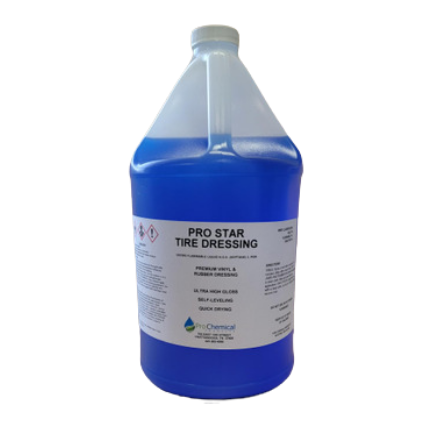
The final "hack" involves the application of Pro Star Tire Dressing. This solvent-based premium dressing is formulated for rapid drying and high-gloss retention. Unlike water-based alternatives that may wash away during inclement weather, Pro Star is water-resistant and durable.
The application of Pro Star Tire Dressing provides a professional, deep-black finish that complements the clean vehicle body. It also serves a functional purpose by conditioning the rubber and providing a barrier against ozone and environmental pollutants that cause cracking and dry rot.
Safety Note: Pro Star Tire Dressing is a solvent-based, flammable product and must be handled with appropriate care by professional detailing personnel.
Technical Summary of Fleet Maintenance Optimization
The transition from labor-intensive scrubbing to a chemistry-driven approach is essential for modern fleet operations. By leveraging the specific properties of Pro-Chemical Products, such as the pH-balancing power of CTW-100 and the surface-sealing capabilities of Shield & Shine, facilities can achieve superior results in a fraction of the time.
For organizations requiring customized solutions, Pro-Chemical Products offers custom formulation services to address unique environmental conditions, specific soil types, or sensitive substrates. Professional-grade results are the byproduct of precision in chemical selection and consistency in application technique.
For procurement inquiries or technical support regarding fleet washing solutions, contact Pro-Chemical Products to consult with an industry expert.


Leave a Reply
Want to join the discussion?Feel free to contribute!