
Sodium hypochlorite, chemically represented as NaOCl, serves as the primary active ingredient in the majority of exterior cleaning operations. Within the industrial cleaning and pressure washing sectors, this compound is frequently referred to as "bleach" or "liquid pool chlorine," yet its application in professional soft washing requires a sophisticated understanding of chemistry, concentration, and safety. This guide provides a technical overview of how sodium hypochlorite is utilized to achieve optimal results when cleaning delicate exterior surfaces.

The Chemistry of Sodium Hypochlorite

Sodium hypochlorite is an inorganic chemical compound that is typically produced by the reaction of chlorine gas with a cold and dilute sodium hydroxide solution. In the context of professional cleaning, it functions as a powerful oxidizing agent. When the solution is applied to a surface, the oxidation process disrupts the cellular structures of organic contaminants. This includes the eradication of mold, mildew, algae, and various forms of lichen that commonly inhabit residential and commercial exteriors.

The efficacy of sodium hypochlorite is attributed to its ability to break the chemical bonds within the molecules of organic matter. This reaction not only removes visible staining but also sanitizes the substrate, effectively delaying the regrowth of biological organisms. For professionals utilizing Pro-Chemical Products, understanding the potency of the starting solution is critical for ensuring both safety and cleaning efficiency.

Industrial blue drum of Pro-Chemical Products sodium hypochlorite solution in a professional warehouse.

Soft Washing vs. Pressure Washing

The distinction between traditional pressure washing and soft washing is defined by the mechanism of action. Pressure washing relies primarily on kinetic energy, high-pressure water, to physically dislodge debris. While effective for dense materials like concrete, high pressure can cause irreversible damage to softer substrates such as vinyl siding, asphalt shingles, and wood.

Soft washing, conversely, prioritizes chemical action. The process involves the application of a specialized chemical solution at low pressure, followed by a low-pressure rinse. Sodium hypochlorite acts as the primary cleaning agent in this methodology. By allowing the chemical to perform the "heavy lifting," the risk of mechanical damage to the building envelope is significantly mitigated. This approach is highly recommended for delicate surfaces and is a core component of the products found in the pressure washing category.

Concentration and Dilution Ratios

In the professional sector, sodium hypochlorite is typically procured at a concentration of 10% to 12.5%. This is significantly higher than standard household bleach, which usually ranges between 5% and 6%. Precise dilution is necessary to ensure that the "sodium hypochlorite percentage on the wall" (SH %) is appropriate for the specific task at hand.

The following guidelines represent standard industry concentrations for various surfaces:

  • Siding (Vinyl, Stucco, Dryvit): A concentration of 0.5% to 1.5% SH is generally sufficient for removing light to moderate organic growth.
  • Roofing (Asphalt Shingles): Due to the high density of Gloeocapsa magma (black algae), a higher concentration ranging from 3% to 4% is often required.
  • Concrete and Masonry: Pre-treating or post-treating concrete with a 2% to 3% solution assists in brightening the surface and removing deep-seated biological spores.

Calculations for these ratios must account for the dilution occurring within the equipment, such as downstream injectors or proportioner systems. Utilizing high-quality chemicals from Pro-Chemical Products ensures consistency in these concentrations.

Professional technician applying low-pressure soft wash cleaning solution to residential vinyl siding.

The Integration of Surfactants: Surfactant 141

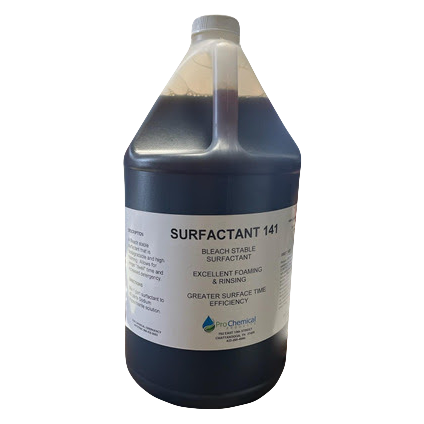
Sodium hypochlorite, while powerful, possesses a high surface tension, which can cause it to bead up and run off vertical surfaces rapidly. To address this, a surfactant must be integrated into the soft wash mix. Pro-Chemical Products offers Surfactant 141, a specialized additive designed specifically for the exterior cleaning industry.

Surfactants provide several critical functional benefits:

  1. Reduced Surface Tension: This allows the cleaning solution to spread more evenly across the substrate.
  2. Increased Dwell Time: By creating a "cling" or "suds" effect, the surfactant keeps the sodium hypochlorite in contact with the organic growth for a longer duration, permitting deeper penetration.
  3. Visual Indicator: The foam generated by Surfactant 141 assists the technician in identifying areas that have already been treated, preventing missed spots and over-application.
  4. Scent Masking: Professional surfactants often contain masking agents that help neutralize the pungent odor associated with high concentrations of bleach.

The combination of sodium hypochlorite and Surfactant 141 creates an optimized cleaning solution that maximizes the utility of the chemicals while minimizing waste.

Safety Protocols and Environmental Stewardship

The handling of sodium hypochlorite necessitates strict adherence to safety protocols. As a corrosive substance, it can cause severe irritation or chemical burns to the skin and eyes. The following Personal Protective Equipment (PPE) is mandatory:

  • Chemical-resistant gloves (Nitrile or PVC).
  • Safety goggles or a full-face shield.
  • Respiratory protection, particularly when working in confined spaces or areas with poor ventilation.
  • Waterproof boots and protective clothing.

Furthermore, environmental protection is a primary concern. Sodium hypochlorite can be detrimental to non-target vegetation. To mitigate this risk, all surrounding plants and landscaping should be thoroughly pre-wetted with fresh water before the application of the cleaning solution. This process saturates the plant cells, preventing the absorption of the bleach. After the cleaning process is complete, a final rinse of the foliage is required to neutralize any residual chemical overspray.

For further information on the technical properties of this compound, professionals are encouraged to review the sodium hypochlorite and some of its uses page on the Pro-Chemical Products website.

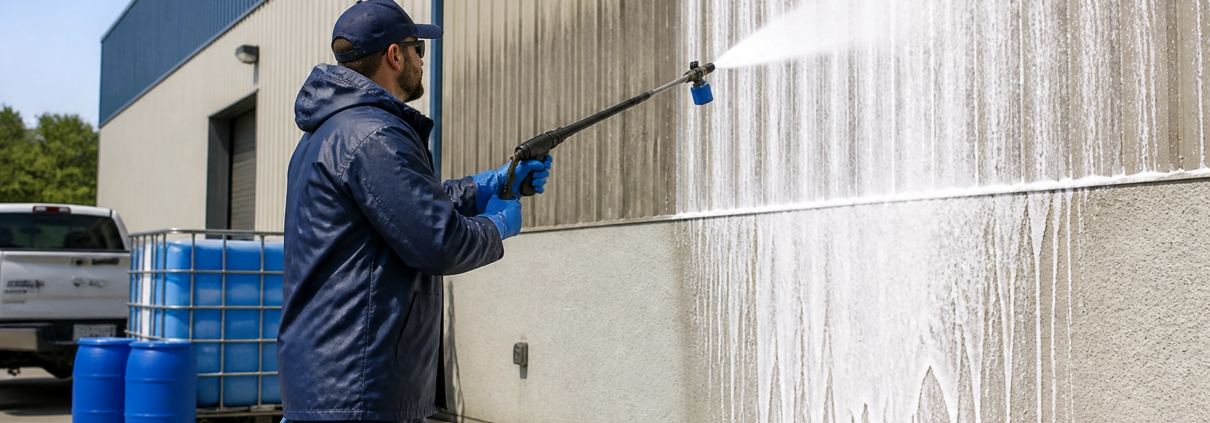
High-cling white foam on exterior siding using Pro-Chemical Products Surfactant 141 for soft washing.

Storage and Shelf Life Factors

Sodium hypochlorite is an inherently unstable molecule that degrades over time. Several factors accelerate this degradation, including:

  • UV Exposure: Sunlight causes the chemical bonds to break down rapidly. Storage in opaque, UV-resistant containers is essential.
  • Temperature: High ambient temperatures significantly increase the rate of decomposition. Solutions should be stored in a cool, shaded environment.
  • Contamination: The introduction of metal ions or organic debris can trigger rapid off-gassing and loss of potency.

Because of this degradation, it is advisable to rotate stock frequently and purchase from a reliable manufacturer like Pro-Chemical Products to ensure the highest possible starting concentration. Using "fresh" chemicals ensures that the calculated dilution ratios remain accurate during application.

Application Procedures for the Perfect Soft Wash

The execution of a professional soft wash follows a standardized sequence to ensure consistency and quality.

  1. Site Inspection: Identify the types of surfaces present and the level of organic infestation. Note any pre-existing damage to the substrate.
  2. Property Protection: Cover sensitive electronics, move outdoor furniture, and begin the pre-wetting process for all vegetation.
  3. Chemical Preparation: Mix the sodium hypochlorite and Surfactant 141 according to the required concentration for the specific surface.
  4. Application: Apply the solution starting from the bottom and working upward. This prevents "streaking" that can occur if the chemical runs down a dry surface.
  5. Dwell Time: Allow the solution to sit on the surface for 5 to 15 minutes. The organic growth will visibly change color (typically turning brown or white) as it is oxidized.
  6. Rinse: Thoroughly rinse the surface with low pressure, moving from the top down to ensure all chemical residue and dead organic matter are removed.
  7. Final Cleanup: Perform a final rinse of the windows and surrounding plants.

Conclusion and Professional Support

Mastering the use of sodium hypochlorite is a foundational skill for any exterior cleaning professional. When utilized correctly, it provides a level of cleanliness that cannot be achieved through mechanical force alone. By combining technical knowledge with high-performance additives like Surfactant 141, contractors can deliver superior results while maintaining the integrity of the surfaces they treat.

Pro-Chemical Products remains committed to providing the industry with high-grade cleaners and degreasers and specialized soft wash components. For inquiries regarding bulk chemical supplies or technical product specifications, please visit the contact page to connect with a representative. For more educational resources on industrial cleaning, the blog offers a wealth of information tailored to the needs of modern service providers.

The efficacy of a soft wash system is fundamentally dependent upon the chemical composition of the solution utilized. In the industrial cleaning sector, precision in mixing sodium hypochlorite (SH), water, and surfactants is the primary determinant of project success. When ratios are calculated incorrectly, the results vary from suboptimal cleaning performance to significant substrate damage and financial loss.

Professional exterior cleaning requires a sophisticated understanding of chemical interactions. Pro-Chemical Products facilitates high-level results by providing industrial-grade formulations, yet even the highest quality chemicals must be applied with technical accuracy. Below is an examination of the seven most common mistakes identified in soft wash mixing and the methodologies required to rectify them.

1. Application of a 50/50 Ratio Using Commercial-Grade Sodium Hypochlorite

A frequent error observed among technicians transitioning from residential maintenance to professional soft washing is the application of a 1:1 (or 50/50) mixing ratio. This practice is often derived from guidelines associated with household bleach, which typically contains a 5% to 6% concentration of sodium hypochlorite. When household bleach is diluted by half, the resulting 2.5% to 3% concentration is often appropriate for organic growth removal.

However, industrial-grade sodium hypochlorite, such as that provided by Pro-Chemical Products, is typically delivered at a 12.5% concentration. Utilizing a 50/50 ratio with professional-grade SH results in a final solution strength of 6.25%. This concentration is excessively "hot" for most residential applications and can lead to immediate oxidation of vinyl siding, damage to window seals, and the death of surrounding vegetation.

To achieve a standard 3% cleaning solution using 12.5% SH, a ratio of approximately 3 parts water to 1 part chemical is required. Precision in these calculations is essential to maintain the integrity of the treated surfaces. More information on the properties of this chemical can be found regarding sodium hypochlorite and some of its uses.

2. Conceptual Confusion Between Ratios and Percentages

In the context of soft washing, a failure to distinguish between a mixing ratio and a final percentage concentration is a common technical oversight. A "1:4 ratio" indicates one part chemical to four parts water, resulting in five total parts. If the initial chemical is 12.5% SH, the final concentration is calculated by dividing 12.5 by 5, resulting in a 2.5% active solution.

Misinterpreting these figures often leads to solutions that are either too weak to remediate organic growth or too strong to be safe. It is recommended that a standardized calculation sheet be utilized within professional operations to ensure consistency across all service vehicles.

Professional technician measuring sodium hypochlorite mix for accurate soft wash ratios.

3. Implementation of a Uniform Mix Across Diverse Substrates

The assumption that a single chemical concentration is suitable for all exterior surfaces is a significant operational error. Different substrates possess varying levels of porosity and sensitivity to oxidative agents.

  • Roofs: Asphalt shingles typically require a higher concentration (3% to 4%) to effectively neutralize Gloeocapsa magma and moss root systems.
  • Siding: Vinyl and dryvit (EIFS) are sensitive; concentrations exceeding 1% to 1.5% may cause permanent discoloration or "tiger stripping."
  • Fences and Decks: Wood surfaces require a much lower concentration (0.5% to 1%) followed by immediate neutralization to prevent the degradation of lignin fibers.

By adjusting the mix for the specific target surface, the longevity of the substrate is preserved and chemical waste is minimized. Professional pressure washing and soft washing supplies allow for this level of customization when handled by trained personnel.

4. Neglecting Proper Surfactant Ratios and Quality

The role of a surfactant in a soft wash mix is twofold: it reduces the surface tension of the water to allow the SH to penetrate organic growth, and it provides "cling" or dwell time on vertical surfaces. A common mistake is the utilization of dish soaps or low-grade detergents that are not bleach-stable.

When non-stable soaps are mixed with sodium hypochlorite, the SH begins to break down the soap molecules immediately, neutralizing the effectiveness of both chemicals. Furthermore, inadequate surfactant ratios lead to the solution running off the surface before the organic matter can be fully eradicated.

Pro-Chemical Products offers Surfactant 141, a professional-grade formulation specifically engineered for the soft wash industry. It is designed to remain stable in high concentrations of SH and provides superior visibility and dwell time. Utilizing a specialized surfactant ensures that the chemical remains on the target area, thereby reducing the volume of SH required to achieve a clean surface.

Thick cleaning foam with Surfactant 141 clinging to vinyl siding for optimal dwell time.

5. Fiscal Inefficiency Through Over-Concentration

The financial implications of improper mixing are often underestimated. Utilizing an unnecessarily strong mix increases the cost per gallon significantly. If a 1% solution is sufficient to clean a specific substrate, but a 3% solution is applied due to poor mixing practices, the chemical cost for that project has tripled without providing an equivalent increase in value.

Analysis of chemical consumption indicates that consistent over-mixing can result in thousands of dollars in lost revenue annually. By utilizing calibrated proportioning systems or rigorous batch-mixing protocols, a business can optimize its profit margins while maintaining high standards of cleanliness.

6. Failure to Mitigate Phytotoxicity and Substrate Damage

Soft washing involves the application of biocides. A "hot" mix: one with excessive SH concentration: poses a severe risk to the surrounding environment. Mistakes in mixing frequently lead to the chemical burning of ornamental plants, grass, and trees.

Beyond botanical damage, high concentrations can cause:

  • Corrosion of aluminum gutters and flashing.
  • Degradation of weather stripping and rubber seals.
  • Etching of certain types of stone and masonry.

The use of professional products from Pro-Chemical Products should always be accompanied by pre-wetting of vegetation and post-application rinsing. However, the most effective preventative measure is the accurate dilution of the chemical mix at the onset of the task.

Technician pre-wetting garden plants to protect vegetation during a professional soft wash service.

7. Improper Storage and Hazardous Chemical Interactions

The stability of sodium hypochlorite is affected by temperature, UV exposure, and time. Storing SH in translucent containers in direct sunlight or in high-temperature environments facilitates rapid degradation. A technician may believe they are utilizing a 12.5% concentration, but if the product has been stored improperly, the actual strength may have diminished to 6% or 8%. This leads to inconsistent cleaning results and the perceived need to "spike" the mix with even more chemicals.

Furthermore, a critical safety mistake is the mixing of SH with incompatible substances. Sodium hypochlorite must never be mixed with:

  • Acids: This reaction produces toxic chlorine gas.
  • Ammonia: This produces hazardous chloramine vapors.
  • Hydrogen Peroxide: This results in a rapid and potentially violent release of oxygen.

Professional operations must ensure that all staff members are educated on the Material Safety Data Sheets (MSDS) for all products utilized on-site to prevent industrial accidents.

Organized rows of 55-gallon industrial chemical drums in a temperature-controlled warehouse.

The Role of Professional Formulations in Risk Mitigation

The transition from amateur mixing to professional-grade application is facilitated by the use of high-quality industrial chemicals. Pro-Chemical Products provides the necessary components for a successful soft wash operation, including specialized surfactants and high-concentration cleaners.

By avoiding these seven common mistakes, cleaning professionals can ensure:

  1. Consistency: Every project meets a predictable standard of excellence.
  2. Safety: Risks to the technician, the client’s property, and the environment are minimized.
  3. Profitability: Chemical waste is reduced, and equipment longevity is increased by avoiding the corrosive effects of over-concentrated mixes.

For those seeking to upgrade their chemical inventory or require technical guidance on specific cleaning challenges, the team at Pro-Chemical Products is available for consultation. Expertise in the chemistry of cleaning is what separates industry leaders from the competition.

To explore the full range of industrial cleaning solutions, including fleet washes, degreasers, and specialized soft wash surfactants, visit the official products page. For specific inquiries regarding chemical compatibility or volume ordering, individuals are encouraged to contact the company directly. Accurate chemistry is the foundation of every clean surface.

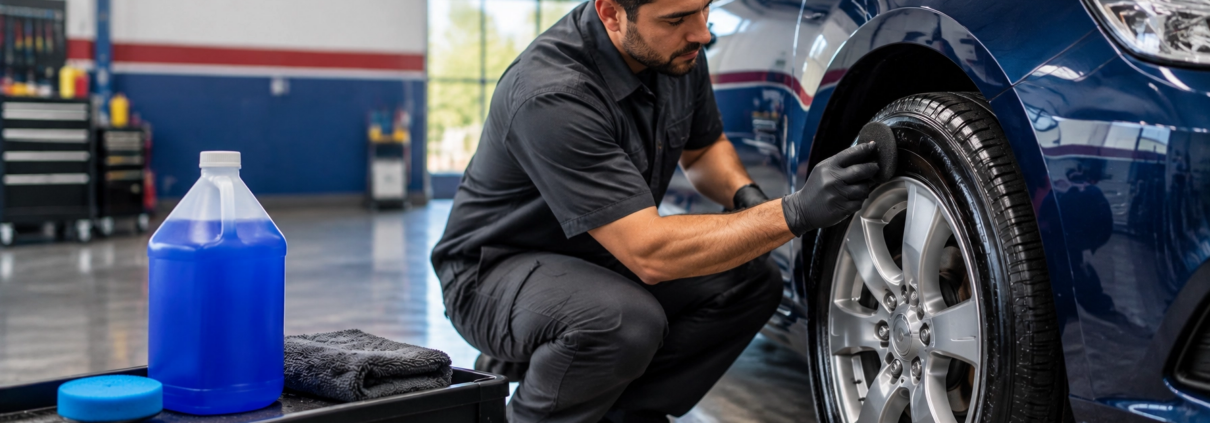
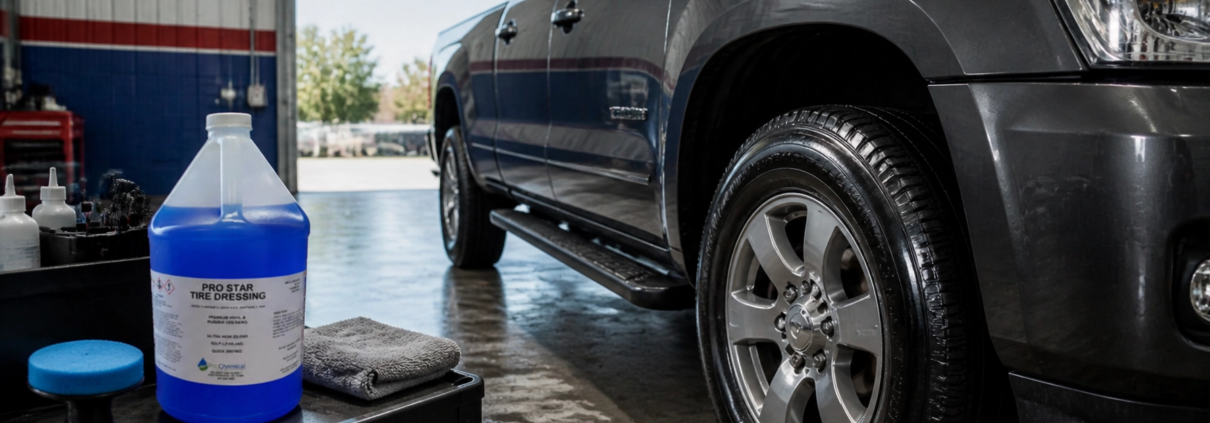
High-gloss commercial truck tires in a professional fleet setting

In the field of industrial fleet maintenance and professional automotive detailing, the selection of surface conditioning agents is a critical factor in achieving both aesthetic and functional objectives. Tire dressings, specifically formulated to enhance the appearance and longevity of rubber components, are categorized primarily by their chemical carrier: solvent-based or water-based. Each formulation presents distinct chemical properties, performance characteristics, and application requirements. This technical analysis evaluates the divergent attributes of these two categories, with specific focus on high-performance solutions utilized in commercial environments and within the broader product portfolio of Pro Chemical Products.

Chemical Composition and Carrier Mechanics

The fundamental distinction between tire dressings lies in the medium utilized to transport the active ingredients: typically silicone polymers: to the rubber surface.

Solvent-Based Formulations

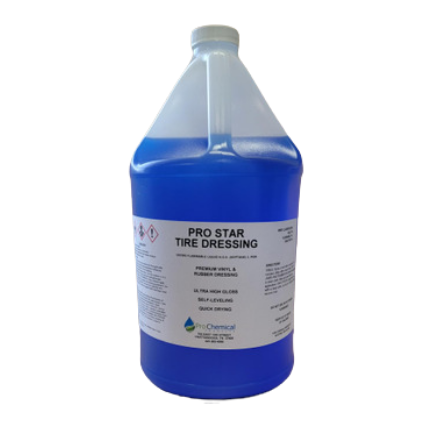
Solvent-based dressings, such as Pro Star Tire Dressing, utilize petroleum distillates or hydrocarbon solvents as the primary carrier. In these formulations, the silicone polymers are fully dissolved within the solvent. Upon application, the solvent undergoes rapid evaporation, often referred to as "flashing." This process leaves behind a concentrated, uniform film of silicone that adheres tenaciously to the rubber substrate.

Water-Based Formulations

Conversely, water-based dressings, exemplified by Armor Clad, utilize water as the suspension medium. Because silicone is naturally hydrophobic, it cannot be dissolved in water; instead, it is suspended in an emulsion through the use of surfactants and stabilizers. These products typically present as a milky-white liquid. The drying process is governed by the evaporation of water, which occurs at a significantly slower rate than hydrocarbon solvents.

Comparison between matte-to-satin and high-gloss tire finishes

Technical Performance Attributes: Gloss and Aesthetics

The aesthetic result achieved is a primary differentiator between these two chemical classes. The choice is often dictated by the specific requirements of the client or the branding standards of a commercial fleet, particularly when products from Pro Chemical Products are being evaluated for commercial appearance standards.

  1. Refractive Index and Gloss Levels: Solvent-based dressings are engineered to produce a high-gloss, "wet-look" finish. The rapid evaporation of the carrier allows for a high concentration of silicone to settle on the surface, creating a smooth layer that maximizes light reflection. This is a desirable attribute for premium auto detailing and showroom presentations.
  2. Satin and Matte Finishes: Water-based products generally produce a more subdued, natural appearance. As the water evaporates, the silicone droplets coalesce to form a satin or matte finish. This is frequently preferred for modern fleet applications where a factory-new appearance is prioritized over high-reflectivity.
  3. Color Depth: Both formulations assist in restoring the deep black coloration of oxidized rubber, though solvent-based agents often provide a more immediate and intense visual transformation of the substrate.

Environmental Resistance and Durability

Commercial fleet vehicles are subjected to rigorous environmental stressors, including precipitation, ultraviolet (UV) radiation, and road contaminants. The durability of a tire dressing is measured by its ability to maintain surface integrity under these conditions. This performance criterion is central to the tire care solutions offered by Pro Chemical Products.

Solvent-based dressings exhibit superior water resistance compared to standard water-based emulsions. Because the carrier is non-polar, the resulting film is inherently hydrophobic. This characteristic prevents the dressing from being easily displaced by rain or road spray. Pro Star Tire Dressing is specifically noted for its excellent water resistance, ensuring that the protective layer remains intact during inclement weather cycles.

Water-based dressings, while offering some degree of protection, are more susceptible to "wash-off" when exposed to heavy precipitation or high-pressure rinsing. However, they are frequently utilized for interior components such as vinyl and leather, where environmental exposure is minimal and a non-greasy finish is required.

Tire displaying high water resistance and beading during operation

Operational Efficiency: Drying Times and Sling Management

In high-volume fleet washing operations, the temporal aspect of application is a vital metric for operational efficiency. Within commercial cleaning programs supported by Pro Chemical Products, this factor frequently influences product selection.

  • Evaporation Kinetics: The volatile nature of hydrocarbon solvents ensures that products like Pro Star dry almost instantaneously upon application. This speed allows vehicles to be returned to service without delay.
  • "Sling" Prevention: A common complication in tire dressing application is "sling": the centrifugal displacement of undried product onto the vehicle's body panels during transit. Solvent-based dressings mitigate this risk through their rapid-dry characteristics. When the carrier flashes off, the remaining silicone film bonds quickly, reducing the likelihood of mechanical displacement.
  • Application Versatility: Water-based dressings, being non-flammable and often less viscous, can be applied via traditional sprayers or specialized foam applicators. While the drying time is longer, the ease of application across various surfaces (rubber, vinyl, leather) provides a different type of operational flexibility.

Application Safety and Regulatory Considerations

The chemical nature of solvent-based dressings necessitates specific safety protocols and environmental considerations, including those addressed when selecting products from Pro Chemical Products.

Flammability

Solvent-based formulations containing petroleum distillates are classified as highly flammable. Pro Star Tire Dressing is categorized as extremely flammable and is strictly intended for professional detailing use. Storage and application must be conducted in well-ventilated areas, away from ignition sources or open flames.

Volatile Organic Compounds (VOCs)

Hydrocarbon solvents contribute to the VOC profile of a facility. In jurisdictions with stringent environmental regulations, the use of water-based alternatives may be necessitated to ensure compliance with air quality standards. Water-based products like Armor Clad offer a safer, non-flammable profile that is suitable for a broader range of environments and less-specialized personnel.

Professional application of tire dressing in a controlled bay

Product Focus: Pro Star Tire Dressing

For operations requiring the highest level of gloss and maximum durability, Pro Star Tire Dressing from Pro Chemical Products is the primary recommendation. This solvent-based premium rubber and tire dressing is engineered for professional-grade performance.

Key Technical Specifications of Pro Star:

  • Carrier Type: High-grade solvent.
  • Drying Profile: Accelerated evaporation (Fast-drying).
  • Aesthetic Output: Excellent high-gloss finish.
  • Environmental Stability: High water resistance and durability.
  • Application Target: Professional automotive detailing and commercial fleet maintenance.

Due to its high concentration of active ingredients and the efficiency of its solvent carrier, Pro Star is utilized when a long-lasting, high-impact finish is the objective. It is particularly effective for large-scale fleet vehicles where a consistent, professional appearance must be maintained through multiple weather events.

Selection Matrix for Commercial Fleets

The determination of which dressing to utilize is guided by the following operational parameters, especially when comparing tire care solutions available through Pro Chemical Products:

Requirement Recommended Formulation Rationale
Maximum Gloss Solvent-Based (Pro Star) High refractive index and surface concentration.
Rapid Turnaround Solvent-Based (Pro Star) Fast evaporation of petroleum distillates.
All-Weather Durability Solvent-Based (Pro Star) Superior hydrophobic properties and bonding.
Multi-Surface Utility Water-Based (Armor Clad) Safe for rubber, vinyl, and leather interiors.
Indoor Safety Water-Based (Armor Clad) Non-flammable and low VOC profile.
Natural Appearance Water-Based (Armor Clad) Satin finish that replicates factory rubber.

Conclusion

The choice between solvent-based and water-based tire dressings involves a technical trade-off between aesthetic intensity, drying speed, and safety considerations. For the professional detailer or fleet manager, solvent-based solutions like Pro Star Tire Dressing from Pro Chemical Products provide an unparalleled level of gloss and weather resistance that is essential for maintaining a premium brand image. Conversely, water-based solutions like Armor Clad from Pro Chemical Products offer versatility and a safer handling profile for general maintenance tasks.

Pro Chemical Products has provided professional-grade chemical solutions since 1971. For technical assistance in selecting the appropriate formulation for specific fleet requirements, contact the Pro Chemical Products team. Custom formulations are also available to meet unique industrial specifications.

Sodium Hypochlorite, generally known as bleach, is most regularly utilized as a cleaning agent. It is mostly known as a wide range sanitizer that is powerful for the sanitization of infections, microbes, growths, and mycobacterium. It is also used for bleaching, cleaning, and deodorizing.

Sodium hypochlorite is a main ingredient for pressure washing exterior surfaces.
Using high or low pressure, sodium hypochlorite solution assists in eliminating mold, mildew, algae, grime, dust, mud, and soil from surfaces such as siding, concrete, decks, fencing, and many other surfaces. Sodium hypochlorite cleans and protects surfaces leaving remarkable results.

Sodium Hypochlorite is available in the Chattanooga area at Pro Chemical Products, located at 702 E. 13th St. For further information about this chemical and its various uses, please visit their website at prochemicalproducts.com or call 423-265-4966.