Heavy-Duty Degreasing Secrets Revealed: What Experts Don’t Want You to Know
In the industrial world, grease is the enemy. It clogs machinery, creates slip hazards on shop floors, and ruins the professional look of a fleet. Most people think that the secret to a perfectly clean engine bay or a pristine warehouse floor is simply finding the "strongest" chemical available. However, at Pro Chemical Products, we have learned that heavy-duty degreasing is less about "magic" and more about the precise intersection of chemistry, technique, and safety.
The "experts" often keep their workflows under wraps because they want you to believe their results are unattainable without a massive service contract. Today, we are pulling back the curtain. Whether you are maintaining a fleet of trucks, cleaning industrial food prep areas, or detailing high-performance vehicles, these secrets will transform how you approach stubborn grime.
The Foundation: Process Over Product
One of the best-kept secrets in the industry is that even a mediocre degreaser can perform exceptionally well if the process is correct. Conversely, the most expensive industrial solvent will fail if it is applied poorly.
Professional degreasing follows a disciplined five-step workflow:
- Mechanical Pre-Cleaning: Before applying any chemicals, professionals remove the "bulk gunk." This involves using a putty knife, stiff brush, or shop rag to scrape away thick layers of built-up grease. This ensures that the chemical can focus on the bonded layer rather than wasting its energy on loose debris.
- Strategic Application: We always recommend applying degreasers from the bottom up on vertical surfaces. This prevents clean streaks from forming and ensures the product dwells evenly across the surface as it naturally gravitates downward.
- The Power of Dwell Time: This is the step most people skip. Chemistry needs time to break molecular bonds. Depending on the soil level, a dwell time of 3 to 10 minutes is usually required. The secret is to keep the surface wet; if the degreaser dries, it can redeposit the grease or even etch the surface.
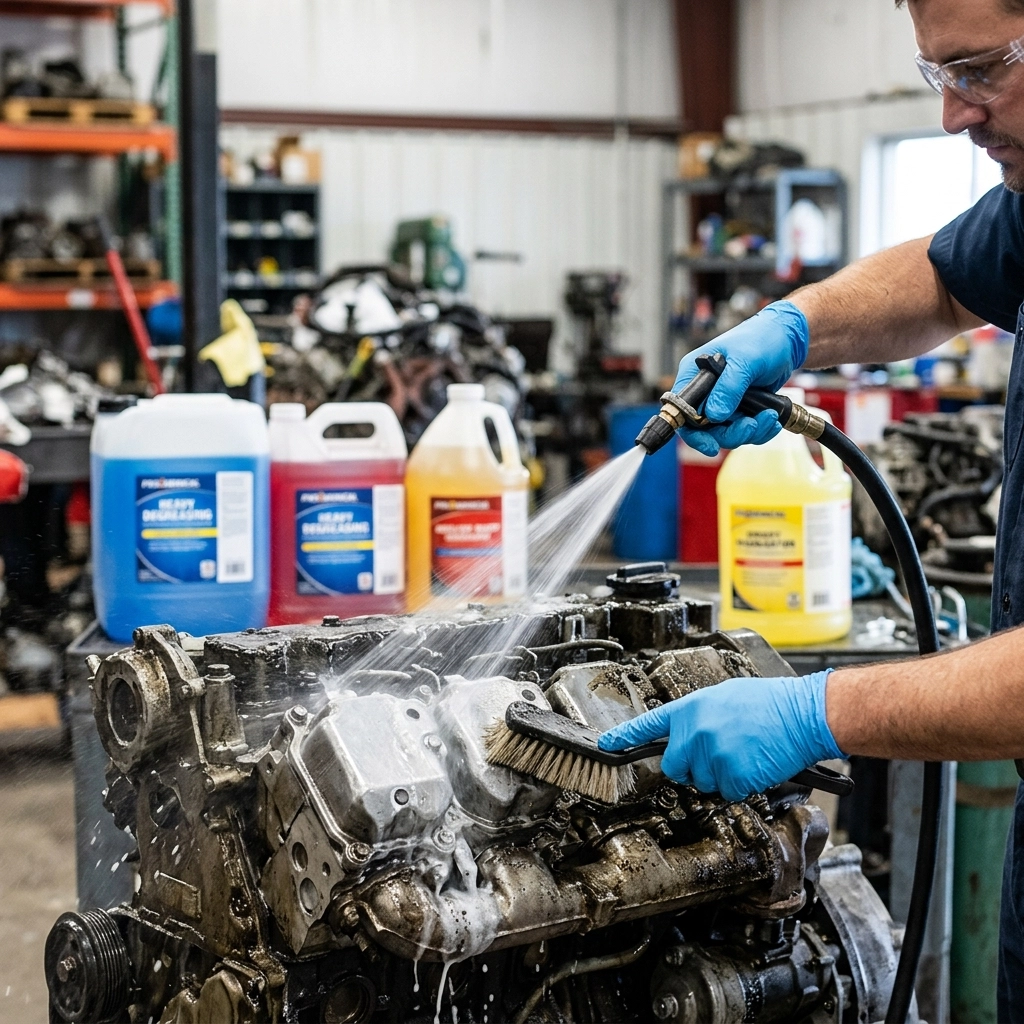
- Agitation: Even the best surfactants need a little help. Using a nylon or brass brush to "work" the chemical into the grease doubles its effectiveness.
- The Rinse: A thorough rinse with high-pressure water (and ideally heat) removes the emulsified grease and any chemical residue.

Decoding the Chemistry: Solvent vs. Water-Based
Understanding the difference between solvent-based and water-based degreasers is the key to protecting your equipment and your health. At Pro Chemical Products, we offer a wide range of cleaners and degreasers tailored to specific needs.
Solvent-Based Degreasers
Solvents are the "heavy hitters" for precision work. They are typically used for electrical components, delicate machinery, or when water must be avoided at all costs. They evaporate quickly and leave little to no residue. However, they come with risks. Many industrial solvents are highly flammable and can be aggressive toward plastics and rubber seals. If you are working in an environment with open flames or sparks: such as a welding shop: solvent-based aerosols require extreme caution.
Water-Based (Alkaline) Degreasers
Water-based degreasers are the workhorses of the fleet washing and pressure washing industries. These products utilize high pH (alkaline) levels to saponify fats and emulsify oils. They are generally non-flammable and much safer for bulk cleaning of large equipment or warehouse floors. The "secret" here is dilution. Using a product at 100% strength isn't always better; sometimes, a 10:1 dilution actually penetrates the grease more effectively by allowing the water to carry the surfactants deeper into the grime.
The Toxic "Danger List" to Avoid
Many "pro" products found in local hardware stores or discount industrial supply houses still utilize chemicals that the modern industry is moving away from. If you look at the labels and see n-Propyl Bromide (nPB), Trichloroethylene (TCE), or Perchloroethylene (Perc), you are looking at potential health hazards.
These chemicals are effective, but they have been linked to neurological damage and respiratory issues. At Pro Chemical Products, we prioritize safer, modern chemistries that deliver the same (or better) cleaning power without putting the user at risk. Always scan the Safety Data Sheet (SDS) for these ingredients. If you can smell a heavy "chemical" scent that makes you feel dizzy, your exposure is too high, and the product is likely outdated.

Plastic and Rubber Compatibility: The Silent Killer
A common mistake made by even seasoned professionals is assuming a degreaser is "safe" because it says it’s for engines. High-strength solvents and certain alkaline cleaners can cause "crazing" or cracking in plastics like polycarbonate (Lexan) or ABS. They can also cause rubber gaskets and O-rings to swell or become brittle over time.
Before you spray down an entire engine bay or a piece of industrial machinery, always perform a "spot test" on a hidden area. This is especially true when using auto detailing products. If you see the plastic turn cloudy or the rubber feel tacky, stop immediately and switch to a milder, plastic-safe formulation.
Specialized Tips for Different Industries
Every environment has its own unique "grease profile." Here is how we recommend tackling different scenarios:
1. Automotive & Heavy Equipment
For engines and chassis, a high-alkaline water-based degreaser is usually the best choice. It cuts through road film and leaked oil effectively. However, you must protect alternators and sensitive sensors from high-pressure water. For tires and trim, follow up with a specialized product like our Pro Star Tire Dressing to restore the look after the degreasing process has stripped away the oils.
2. Commercial Kitchens
Grease in a kitchen is organic (fats and oils) and often carbonized from heat. This requires a food-service-approved cleaner that can break down proteins and fats. The secret here is heat; using hot water (140°F+) for both dilution and rinsing will significantly speed up the process.
3. Warehouse and Shop Floors
When cleaning concrete, the biggest challenge is the porosity of the surface. Grease sinks deep into the "pores" of the concrete. A foaming degreaser is highly effective here because the foam stays in contact with the floor longer, drawing the oil out through capillary action before you hit it with a floor care scrubber or pressure washer.

Why Choosing the Right Partner Matters
At Pro Chemical Products, we don't just sell chemicals; we provide solutions. We understand that your business relies on efficiency. Using a sub-par degreaser means more labor hours, more scrubbing, and higher costs in the long run. By choosing professional-grade products designed for the specific task at hand: whether it’s acid cleaners for aluminum brightening or solvents for parts cleaning: you are investing in the longevity of your equipment.
Our commitment to quality ensures that you get products that are:
- Highly Concentrated: Save money by diluting the product to the exact strength you need.
- Surface Safe: Formulated to protect the materials you are cleaning.
- Environmentally Conscious: Moving away from the "danger list" chemicals toward modern, biodegradable surfactants.
Final Pro Tip: The "Sniff Test" for Rinsing
How do you know if you’ve truly finished the job? A pro knows the surface is clean when the water "sheets" off rather than "beading" (which indicates wax or grease is still present) and when there is no slick feeling to the touch. If you are using an alkaline degreaser, the surface should feel "squeaky" clean. If it’s still slippery, there is still soap or grease residue that needs to be rinsed away.

Degreasing doesn't have to be a mystery. By focusing on dwell time, choosing the right chemistry for the surface, and prioritizing safety, you can achieve results that rival any professional cleaning crew.
If you are ready to upgrade your cleaning arsenal or need advice on a specific grease problem, contact us today. We’ve been helping businesses across the country maintain their equipment and facilities with the best industrial cleaning products on the market.
For more tips on maintenance and chemical safety, be sure to check out our other blog posts and explore our full range of solutions at Pro Chemical Products.

Leave a Reply
Want to join the discussion?Feel free to contribute!