7 Mistakes You’re Making with Industrial Degreasers and How Pro-Chemical Products Fixes Them
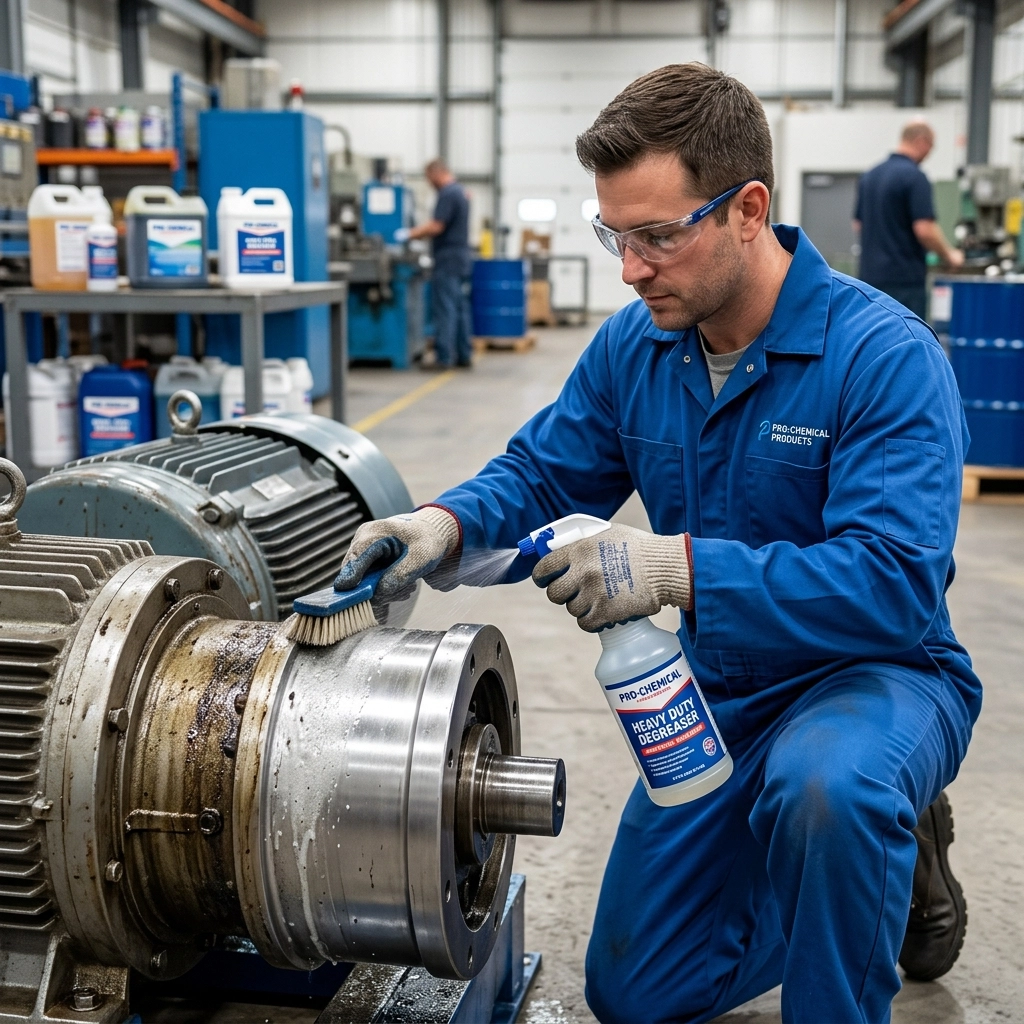
The efficacy of industrial maintenance is heavily predicated on the precision of chemical application. In environments where heavy machinery, automotive fleets, and manufacturing equipment are utilized, the accumulation of grease, oils, and carbonaceous soils is an inevitability. While degreasing is a standard procedure, the process is frequently undermined by technical errors that compromise equipment integrity and operational efficiency.
Pro-Chemical Products provides advanced chemical solutions designed to mitigate these errors. By understanding the common pitfalls associated with industrial degreasers, facilities can transition from reactive cleaning to a streamlined, scientifically-backed maintenance protocol.
1. Utilizing an Incorrect Chemical Formulation for the Specific Soil
A primary error in industrial sanitation is the assumption that all degreasers function universally across all soil types. Chemical cleaning involves a sophisticated interaction between the cleaning agent and the contaminant. Soils are generally categorized as organic (fats, oils, proteins) or inorganic (scale, rust, oxidation).
When a low-alkalinity cleaner is utilized on heavy petroleum-based grease, the results are typically insufficient. Conversely, utilizing a highly caustic degreaser on soft metals such as aluminum can lead to irreversible etching or corrosion. Pro-Chemical Products assists in this selection process by offering a diverse inventory of solvents and acid cleaners tailored to specific industrial requirements. Selecting a product with the appropriate pH level is essential for ensuring the soil is emulsified without damaging the underlying substrate.
2. Inaccurate Dilution Ratios and the "Manual Pour" Fallacy
In many industrial settings, chemical dilution is performed through estimation rather than precise measurement. This "manual pour" methodology is problematic for several reasons. Over-concentration of a degreaser does not necessarily equate to a cleaner surface; rather, it often results in chemical waste, residue buildup, and potential damage to surface coatings.
Under-dilution is equally detrimental, as the chemical concentration becomes insufficient to break the molecular bonds of the grease. To optimize performance, Pro-Chemical Products recommends the utilization of automated dispensing systems or calibrated measuring vessels. Precision in dilution ensures that the chemical potential of the product is fully realized, maintaining cost-efficiency and surface safety.

3. Insufficient Dwell Time for Chemical Penetration
Industrial degreasing is a chemical reaction that requires a specific temporal window to be effective. A common mistake is the immediate removal of the degreaser through pressure washing or wiping before the surfactant system has had the opportunity to penetrate the soil.
Dwell time allows the degreaser to migrate through the layers of grease, detaching the contaminant from the surface through a process known as emulsification. For heavy build-up, a dwell time of 5 to 15 minutes is often required. Pro-Chemical Products formulates solutions with superior cling properties to ensure the chemical remains in contact with vertical surfaces, preventing premature runoff and ensuring the chemistry has ample time to perform its intended function.
4. Neglecting Temperature Variables During Application
The thermodynamic state of both the cleaning solution and the substrate significantly influences the rate of chemical reaction. Grease and oil possess a "melting point" or a temperature at which their viscosity decreases, making them more susceptible to chemical attack.
Utilizing cold water in conjunction with a degreaser designed for hot-water applications often results in "re-deposition," where the grease is moved but not fully removed. However, excessively high temperatures can cause certain degreasers to evaporate or "flash off" too quickly, leaving behind a concentrated chemical film. Pro-Chemical Products provides technical guidance on the optimal temperature ranges for their specific formulations, ensuring that the thermal energy assists the chemical energy rather than hindering it.
5. Improper Application Technique: Top-Down vs. Bottom-Up
The physical method of applying a degreaser is as critical as the chemical itself. A frequent procedural error in fleet washing and large equipment maintenance is applying the degreaser from the top of the unit downward.
When a degreaser is applied from the top, the chemical runs down over dry, soiled surfaces, creating "streak marks" or "run lines" that are difficult to remove. The correct industrial protocol involves applying the degreaser from the bottom upward, ensuring even coverage. Rinsing, however, should be conducted from the top down to ensure all loosened soil and chemical residue are flushed toward the drainage system. Pro-Chemical Products supports these technical standards by providing products that are easily identifiable during application to ensure total surface coverage.

6. Overlooking Safety Protocols and SDS Compliance
Industrial degreasers, particularly those utilized for heavy-duty applications, contain concentrated surfactants and solvents that require strict adherence to safety protocols. A common mistake is the failure to consult the Safety Data Sheet (SDS) prior to use. This leads to inadequate Personal Protective Equipment (PPE) selection, such as utilizing the wrong grade of gloves or neglecting respiratory protection in poorly ventilated areas.
Pro-Chemical Products prioritizes transparency and safety by providing comprehensive documentation for every product in the catalog. Ensuring that staff members are trained to interpret SDS information is a fundamental step in preventing workplace accidents and long-term health complications associated with chemical exposure.
7. Environmental Non-Compliance and Runoff Mismanagement
With the increasing stringency of environmental regulations, the management of cleaning runoff has become a primary concern for industrial facilities. A significant mistake is the discharge of degreaser-laden wastewater into storm drains or untreated soil. Many traditional degreasers contain phosphates or high VOC (Volatile Organic Compound) levels that are detrimental to aquatic ecosystems.
Pro-Chemical Products addresses these concerns by developing formulations that are more environmentally responsible without sacrificing industrial-strength performance. Utilizing biodegradable surfactants and ensuring that the facility has a proper oil-water separator system are essential steps in maintaining regulatory compliance. Facilities are encouraged to review the products page to identify solutions that align with local environmental mandates.

How Pro-Chemical Products Assists in Optimizing Industrial Cleaning
The transition from inefficient cleaning to a high-performance maintenance program requires more than just high-quality chemicals; it requires a partnership with a manufacturer that understands the nuances of industrial chemistry. Pro-Chemical Products serves as a technical resource for businesses seeking to eliminate the aforementioned mistakes.
By utilizing the specialized formulations provided by Pro-Chemical Products, such as those found in the pressure washing and fleet washing categories, operations can achieve superior results with less physical labor and lower chemical consumption.
The integration of professional-grade degreasers into a facility’s workflow ensures:
- Extended lifespan of machinery and vehicle fleets.
- Reduced downtime due to cleaner, better-maintained components.
- Enhanced safety for personnel through stable and predictable chemical reactions.
- Consistent aesthetic standards that reflect the professionalism of the organization.
For entities requiring specific guidance on chemical compatibility or application strategies, the contact page provides a direct line to technical expertise. Whether the requirement involves a specialized surfactant for soft washing or a heavy-duty solvent for industrial degreasing, Pro-Chemical Products delivers the precision required for modern industrial demands.
Conclusion
The complexities of industrial degreasing necessitate a disciplined approach to chemical selection, dilution, and application. By avoiding the seven common mistakes outlined: ranging from incorrect chemical selection to improper runoff management: facilities can ensure optimal performance and safety. Pro-Chemical Products remains committed to providing the industrial sector with the high-caliber cleaning solutions and technical knowledge necessary to maintain peak operational efficiency in even the most demanding environments.


Leave a Reply
Want to join the discussion?Feel free to contribute!