Fleet Wash Chemistry: How CTW-100 Improves Commercial Truck Cleaning Efficiency
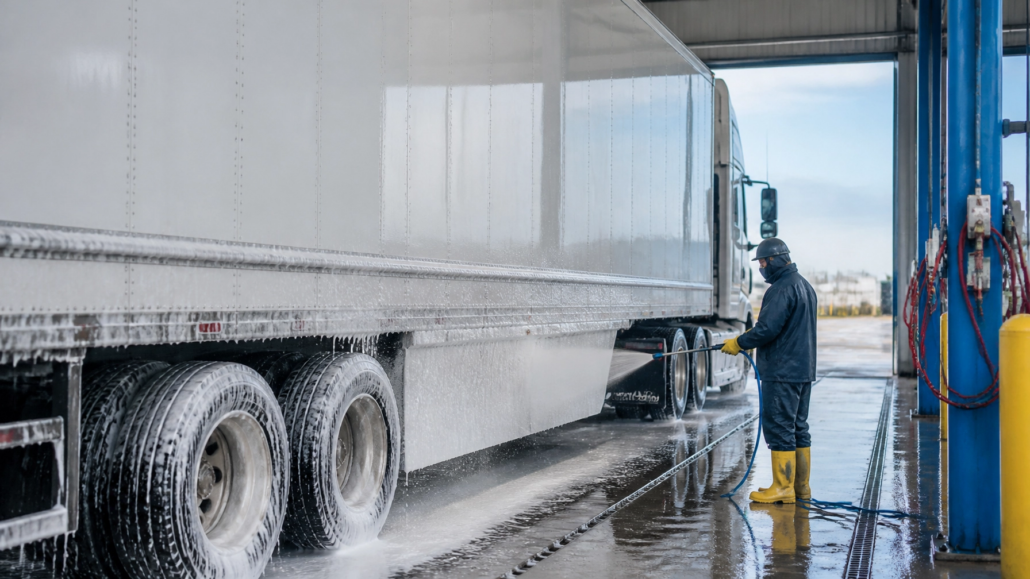
Commercial fleet washing is most efficient when chemistry, equipment, labor, and inspection standards are managed as a single process. Inconsistent dilution, uncontrolled dwell time, incomplete rinsing, and variable application patterns can produce uneven results even when high-pressure equipment is available.
Pro Chemical Products’ CTW-100 is an extra heavy-duty truck and trailer wash concentrate formulated for demanding commercial vehicle cleaning. The product is identified for removing road film, brake dust, exhaust deposits, bug residue, and other heavy traffic contamination from large vehicle surfaces. A standardized operating procedure allows CTW-100 to be evaluated not only by visual appearance, but also by labor time, chemical consumption, water use, and cost per truck.
Pro Chemical Products has manufactured cleaning products in Chattanooga, Tennessee, since 1971. Its fleet-washing product line is designed for professional vehicle-care applications, including high-volume truck and trailer maintenance.
Why Fleet Washing Requires Controlled Chemistry
Commercial trucks accumulate multiple soil types during routine operation. These soils do not respond identically to water pressure or detergent alone.
Common contamination includes:
- Road film: A mixed deposit containing mineral particles, petroleum residue, dust, and atmospheric pollutants.
- Brake dust: Fine metallic and mineral particulate concentrated around wheels, lower panels, and chassis components.
- Exhaust deposits: Carbonaceous soot and oily residue that collect on rear doors, lower trailer sections, and areas exposed to diesel emissions.
- Grease and lubricant residue: Hydrocarbon-based contamination found near fifth wheels, hinges, wheel assemblies, and maintenance zones.
- Bug residue: Protein-based organic material that becomes more difficult to remove after drying or prolonged exposure to sunlight.
- General traffic soil: Mud, grit, salt, agricultural residue, and airborne particulate.
A suitable detergent assists by reducing surface tension, emulsifying oily contamination, suspending particulate, and promoting soil release during rinsing. CTW-100 is positioned by Pro Chemical Products as a heavy-duty concentrate for these commercial truck-wash conditions.
CTW-100 Within a Two-Step Fleet Wash Process
A two-step process is commonly structured around different soil-release mechanisms:
- A first-stage presoak is selected to loosen mineral deposits, road film, and other inorganic contamination.
- CTW-100 is applied as the heavy-duty detergent stage when the wash system and product directions support an alkaline second step.
- A controlled rinse removes suspended soil and residual chemistry from the vehicle surface.
The sequence should not be interpreted as permission to mix products in a container or chemical delivery line. Acidic and alkaline products should be stored, proportioned, and applied according to their respective labels, technical data, and safety documentation.
The second step is most effective when the first treatment remains wet and active. CTW-100 should be applied uniformly rather than concentrated only on visibly dirty areas. Lower panels, wheel zones, rear doors, fuel tanks, underbody edges, and trailer seams generally require closer inspection because contamination is frequently concentrated in these locations.

Application Sequence for Repeatable Results
A documented sequence reduces variation between technicians and wash shifts.
1. Inspect the vehicle
Before chemical application, the vehicle should be evaluated for:
- Existing coating failure or oxidation
- Damaged paint or clear coat
- Vinyl graphics, wraps, and decals
- Uncoated or highly oxidized aluminum
- Sensitive trim, seals, mirrors, and camera systems
- Heavy grease deposits requiring localized treatment
- Areas requiring mechanical agitation
The surface temperature, sunlight, wind, and ambient conditions should also be considered. Hot panels and strong airflow accelerate evaporation and can shorten the safe working window.
2. Pre-rinse loose soil
A preliminary rinse removes loose grit and reduces the amount of abrasive material remaining on the surface. This stage is particularly important on lower panels and wheel areas where sand and road particulate may be present.
3. Apply the first chemical stage
The presoak should be applied according to its label directions, generally in manageable sections. Bottom-to-top application can assist with uniform wetting on heavily soiled vertical surfaces. The product should not be allowed to dry.
4. Apply CTW-100 consistently
CTW-100 should be proportioned through calibrated chemical-delivery equipment or a measured manual system. The correct dilution must be established from the current product label and technical documentation rather than estimated by color, foam volume, or operator preference.
Foam appearance is not a reliable measure of cleaning strength. A low-foaming solution may clean effectively, while excessive foam may indicate air entrainment rather than a higher active concentration.
5. Control dwell time
Dwell time allows surfactants and degreasing components to penetrate and suspend contamination. The ideal period depends on dilution, soil loading, water temperature, substrate temperature, and weather.
A practical operating rule is:
- Work in sections small enough to remain wet.
- Begin rinsing when soil has visibly released.
- Shorten dwell time on hot, sun-exposed, or windy surfaces.
- Rinse immediately if drying begins.
- Avoid extending dwell time simply to compensate for incorrect dilution.
6. Rinse from top to bottom
The final rinse should be conducted from the highest vehicle surfaces downward. This direction allows gravity to carry loosened soil and spent chemistry away from already-cleaned panels.
Particular attention should be given to:
- Roof edges and trailer seams
- Door hardware and hinges
- Mirrors and recessed trim
- Wheel wells and lower rails
- Fuel tanks and steps
- Underside edges and splash zones

Dilution Calibration and Cost-Per-Truck Measurement
Dilution calibration converts chemical selection into an operating standard. The procedure should begin with the manufacturer’s recommended range and be validated on a representative test vehicle.
A documented calibration program should record:
- Concentrate volume
- Water volume
- Injector or proportioner setting
- Delivered solution concentration
- Vehicle size and surface area
- Soil severity
- Water temperature
- Dwell time
- Final inspection result
Chemical cost per truck can be calculated as:
Chemical cost per truck = concentrate consumed per truck × concentrate cost per unit
A more complete operating measurement can include labor and water:
Total wash cost per truck = chemical cost + labor cost + water cost + wastewater-management cost
The objective is not to identify the strongest possible mixture. The objective is to identify the lowest practical concentration that achieves the required cleaning standard without increasing rework, touch-up labor, or surface risk.
CTW-100 consumption should therefore be evaluated against:
- Minutes of chemical application
- Minutes of rinsing
- Touch-up frequency
- Rewash rate
- Trucks completed per shift
- Concentrate consumed per vehicle
- Customer or internal inspection score
This approach assists fleet managers in distinguishing genuine efficiency from cosmetic foam production or excessive chemical usage.
Surface Compatibility, PPE, and Runoff Management
CTW-100 should be evaluated on the specific surfaces present in the fleet. Painted panels, vinyl graphics, aluminum, stainless steel, rubber, glass, and previously damaged coatings can respond differently to high-strength chemistry. A small test area should be treated before broad application, particularly on aged, oxidized, uncoated, or recently refinished surfaces.
Product handling should be governed by the current label and Safety Data Sheet. Chemical-resistant gloves, protective eyewear, suitable work clothing, and footwear with slip-resistant soles should be selected according to the hazard classification and application method. Guidance from the Occupational Safety and Health Administration’s Hazard Communication standard should be incorporated into employee training and chemical communication procedures.
Runoff should also be managed as part of the wash design. Wash water containing detergent, suspended road soil, grease, or automotive residue should not be allowed to enter storm drains unless the discharge is specifically authorized. The U.S. Environmental Protection Agency’s industrial stormwater guidance provides general regulatory context. Local sewer, pretreatment, and wastewater requirements should be verified before a wash bay is operated or modified.
Practical Fleet Wash Checklist
Before washing
- Confirm product labels and current safety documentation.
- Inspect paint, graphics, aluminum, trim, and damaged areas.
- Verify chemical proportioning equipment.
- Confirm runoff containment or approved discharge arrangements.
- Remove loose debris with a pre-rinse.
- Select a workable vehicle section size.
During chemical application
- Apply the first-stage presoak according to its directions.
- Keep treated surfaces wet.
- Apply CTW-100 at the calibrated operating dilution.
- Maintain consistent coverage on lower panels and rear surfaces.
- Avoid mixing concentrated products.
- Adjust the work pace for heat, sun, and wind.
During rinsing and inspection
- Rinse from the top downward.
- Flush seams, wheel wells, mirrors, and recessed areas.
- Confirm that no detergent residue remains.
- Inspect for road film, brake dust, exhaust staining, and bug residue.
- Record concentrate usage and wash time.
- Document any rewash or spot-treatment requirement.

CTW-100 for Commercial Cleaning Programs
CTW-100 provides a practical heavy-duty detergent option for fleet operators seeking greater consistency across vehicle sizes, technicians, and wash locations. Its value is best evaluated through a repeatable process rather than through product strength alone.
Pro Chemical Products’ Chattanooga manufacturing heritage, established in 1971, supports a broader approach that includes professional-grade cleaning products, refillable formats, and custom formulation capabilities. The company’s About page provides additional background on its manufacturing and formulation services.

For product specifications, purchasing information, or guidance on selecting a fleet-wash chemistry program, contact Pro Chemical Products at 423-265-4966 or visit the company at 702 East 13th Street, Chattanooga, TN 37408.


Leave a Reply
Want to join the discussion?Feel free to contribute!