The Ultimate Guide to Professional Fleet Washing: Everything You Need to Succeed with Pro-Chemical Products
The maintenance of a commercial fleet is a critical operational requirement for modern logistics and industrial enterprises. Beyond the aesthetic implications of a clean vehicle, professional fleet washing serves to protect assets from corrosive road elements, ensure regulatory compliance, and uphold the professional reputation of the organization. To achieve optimal results, the utilization of industrial-grade chemical formulations and standardized application procedures is mandatory. This guide examines the technical aspects of fleet maintenance, emphasizing the systematic application of Pro-Chemical Products to maximize efficiency and surface longevity.
The Technical Necessity of Fleet Maintenance
Industrial vehicles are subjected to extreme environmental stressors, including road salts, atmospheric pollutants, hydraulic fluids, and biological contaminants. If these substances are not regularly removed, oxidation and chemical degradation of the substrate occur. The implementation of a rigorous cleaning schedule prevents the premature failure of paint systems and the structural compromise of aluminum and steel components.
Soil Composition and Chemical Mitigation
Soil found on commercial fleets is typically categorized into organic and inorganic components. Organic soils, such as oils, greases, and proteins, require alkaline detergents for effective emulsification. Conversely, inorganic soils, including mineral deposits and metallic oxides, are best addressed through acidic formulations. A comprehensive cleaning strategy must account for both soil types to ensure a residue-free finish.
Methodologies of Application: The Two-Step Cleaning Sequence
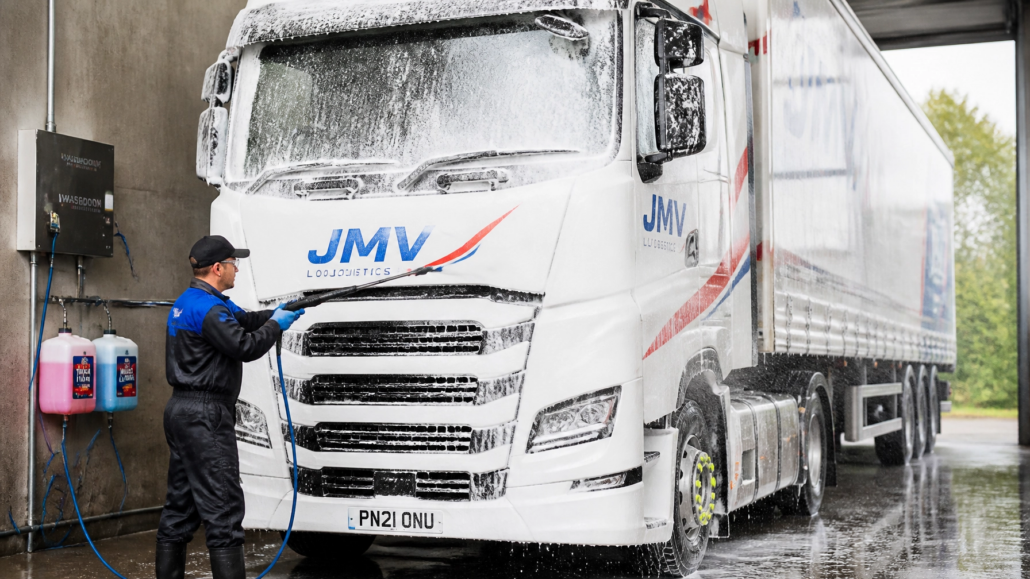
Professional fleet washing often employs a two-step touchless process, which minimizes mechanical friction and reduces the risk of surface marring. This sequence relies on the chemical reaction between an acidic pre-soak and an alkaline detergent.
- Step One: Acidic Application: An acidic cleaner, such as the Heavy-Duty Aluminum Brightener, is applied to the dry surface. This agent functions by breaking the static bond between the road film and the vehicle’s surface. It is particularly effective at brightening oxidized aluminum fuel tanks and wheels.
- Step Two: Alkaline Neutralization: Before the acidic agent is permitted to dry, an alkaline detergent, such as CTW-100, is applied directly over it. The resulting exothermic reaction assists in lifting the remaining soil. The combination of these two chemicals creates a comprehensive cleaning action that removes both mineral and organic films without the requirement for manual agitation.

Essential Chemical Formulations for Fleet Integrity
The selection of specific chemical agents is dictated by the surface material and the severity of the contamination. Pro-Chemical Products manufactures a diverse array of solutions engineered for the rigors of industrial applications.
CTW-100 Heavy-Duty Truck and Trailer Wash
CTW-100 is an extra heavy-duty concentrate formulated for the rapid removal of exhaust deposits, brake dust, and road film. It is utilized in both one-step and two-step processes. Its high concentration allows for significant dilution, making it a cost-effective solution for large-scale operations.
Heavy-Duty Aluminum Brightener
For vehicles featuring polished or brushed aluminum, the utilization of a specialized brightener is essential. The Heavy-Duty Aluminum Brightener contains a blend of hydrofluoric and sulfuric acids designed to restore the luster of metallic surfaces. Due to the high concentration of these acids, rigorous adherence to safety protocols and the use of Personal Protective Equipment (PPE) is required during application.

Operational Parameters: Pressure, Volume, and Temperature
The efficacy of the cleaning process is heavily influenced by the technical specifications of the delivery equipment.
- Water Volume (GPM): High water volume is critical for efficient rinsing. For professional fleet washing, a minimum of 4.0 to 5.5 Gallons Per Minute (GPM) is recommended. This volume ensures that chemical residues are thoroughly flushed from the surface, preventing streaks.
- Pressure (PSI): While pressure assists in soil displacement, excessive pressure can damage decals and electrical components. A range of 2000 to 2500 PSI is generally sufficient for most fleet applications.
- Thermal Control: The utilization of hot water (100–130°F) significantly enhances the performance of surfactants and emulsifiers. High temperatures assist in the breakdown of heavy greases and waxes, reducing the dwell time required for chemical agents.
Advanced Protection and Detailing Procedures
Once the primary cleaning cycle is complete, supplementary treatments are utilized to provide surface protection and enhance the visual presentation of the fleet.
Shield & Shine Surface Protection
To mitigate future soil adhesion, Shield & Shine is applied as a final rinse aid. This product incorporates carnauba wax and silicone polymers to create a hydrophobic barrier. This layer promotes water beading and protects the paint from UV degradation, extending the interval between required cleanings.
Pro Star Tire Dressing
The final aesthetic touch for a professional fleet involves the treatment of rubber components. Pro Star Tire Dressing is a solvent-based formulation that provides a high-gloss, water-resistant finish. Its rapid-drying properties ensure that the dressing does not "sling" onto the clean body panels when the vehicle is returned to service.

Degreasing Operations for Chassis and Powertrains
Heavy machinery and engine compartments require specialized degreasing agents to remove thick accumulations of hydraulic fluid and carbonized grease. CA Orange is an alkaline, non-butyl super-strength degreaser utilized for these intensive applications. It is applied to the targeted areas, permitted to dwell for several minutes, and then rinsed with high-pressure hot water. This process is essential not only for cleanliness but also for the facilitation of mechanical inspections and fire prevention.
Facility Maintenance and Personnel Safety
A professional washing operation extends beyond the vehicle itself. The environment in which the washing occurs must be maintained to ensure safety and operational efficiency.
- Floor Care: To maintain a clean wash bay and prevent slip hazards, Meta Mop is utilized. As a neutral, no-rinse cleaner, it effectively maintains finished floors without leaving a film that could compromise traction.
- Personnel Hygiene: Given the industrial chemicals utilized in fleet washing, the availability of specialized hand cleansers is vital. Unique is a mild body shampoo and skin cleanser that removes industrial residues while maintaining skin integrity through its sudsing and moisturizing properties.
- Sanitization: In scenarios involving food service fleets, the use of Sodium Hypochlorite (industrial bleach) is required to ensure surfaces are sanitized and free of biological contaminants.

Conclusion
The successful execution of a professional fleet washing program is dependent upon the integration of high-performance chemical solutions, such as those provided by Pro-Chemical Products, and a disciplined adherence to technical procedures. By utilizing specialized agents like CTW-100, CA Orange, and Pro Star Tire Dressing, organizations can ensure their fleets remain protected, compliant, and visually impressive. For custom formulations or technical assistance regarding specific fleet requirements, industry professionals are encouraged to contact our technical team.

Leave a Reply
Want to join the discussion?Feel free to contribute!